What is PCOS? Symptoms, Causes, Diagnosis and Treatment
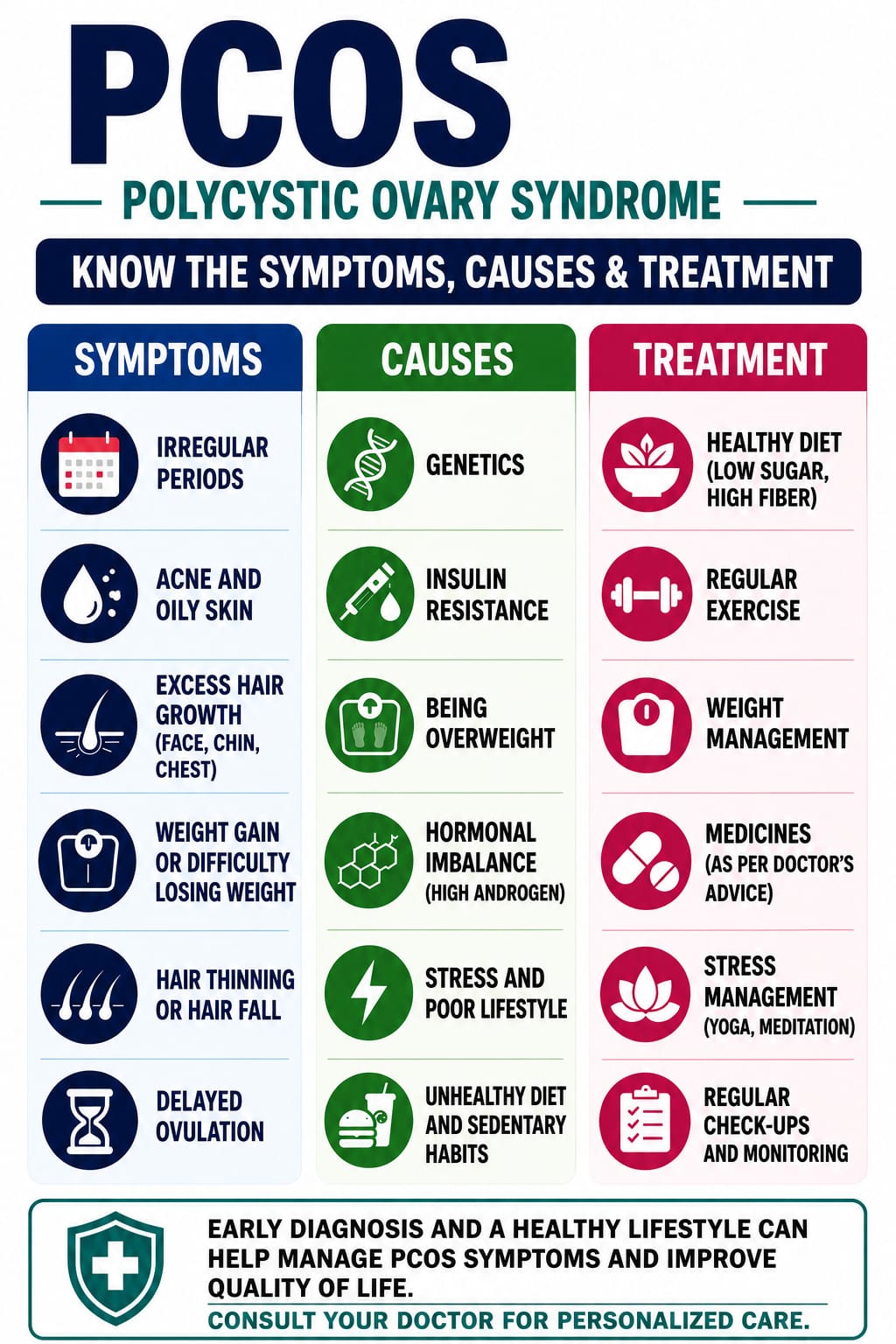
Understand Polycystic Ovary Syndrome (PCOS), its symptoms, causes, diagnosis, treatment options, fertility concerns, lifestyle management and long-term health effects.
What is PCOS?
Polycystic Ovary Syndrome (PCOS) is a common hormonal disorder affecting 10% to 13% of women of reproductive age worldwide. The condition occurs when a hormonal imbalance — often driven by elevated androgen levels — disrupts normal ovarian function, sometimes leading to the growth of small cysts. Studies suggest that up to 70% of affected women globally remain undiagnosed.
PCOS is a leading cause of anovulation (the absence of ovulation) and female infertility. While the condition often runs in families, its symptoms vary widely from person to person. It is also a chronic metabolic condition that persists well beyond a woman's reproductive years.
Compared to those without the condition, women with PCOS face a higher risk of long-term physical and emotional health complications, including insulin resistance, type 2 diabetes and obesity.
Quick facts:
- Affects approximately 10–13% of women of reproductive age.
- Up to 70% of cases remain undiagnosed.
- One of the leading causes of female infertility.
- Associated with insulin resistance and metabolic disorders.
- Symptoms and severity vary among individuals.
Symptoms of PCOS
The symptoms of Polycystic Ovary Syndrome vary significantly from person to person. Some individuals experience only mild symptoms, while others may develop multiple reproductive, hormonal and metabolic complications. Symptoms can also change throughout different stages of life.
Common symptoms of PCOS
- Irregular periods or a complete absence of menstruation
- Heavy, prolonged or painful menstrual periods
- Difficulty conceiving or infertility
- Excessive facial or body hair growth (hirsutism)
- Female-pattern hair thinning or male-pattern baldness
- Severe acne and oily skin
- Unexplained weight gain or obesity
Important note: If you experience one or more of these symptoms, consult a qualified gynaecologist for professional medical advice. PCOS presents differently in every individual. Some women may only experience infertility or irregular periods, while others may have several symptoms simultaneously. Likewise, having one or more of these symptoms does not automatically mean you have PCOS. A proper medical evaluation is essential for diagnosis.
Long-term health risks
Without proper management, PCOS increases the likelihood of developing several chronic health conditions later in life.
- Type 2 diabetes
- High blood pressure (hypertension)
- High cholesterol
- Heart disease
- Sleep apnoea
- Obesity
- Gestational diabetes during pregnancy
- Endometrial hyperplasia and endometrial cancer
- Metabolic dysfunction-associated steatohepatitis (liver inflammation)
Beyond physical health, PCOS can also affect emotional well-being. Many women experience anxiety, low mood, poor body image, difficulties with eating, and social stigma related to infertility, weight, acne or excessive hair growth. These effects are real and treatable, and they are worth raising with a doctor alongside the physical symptoms.
Causes of PCOS
The exact cause of Polycystic Ovary Syndrome remains unknown. However, research indicates that PCOS develops due to a combination of genetic, hormonal, environmental, lifestyle and metabolic factors rather than a single identifiable cause.
1. Genetics
PCOS frequently runs in families. If a close female relative such as your mother, sister or aunt has PCOS, your risk of developing the condition is significantly higher. Scientists believe that multiple genes contribute to the disorder rather than one specific gene.
2. Insulin resistance
Insulin regulates blood sugar levels. When the body's cells become resistant to insulin, the pancreas produces larger amounts of insulin to compensate. Excess insulin stimulates the ovaries to produce more androgens, including testosterone, leading to irregular ovulation, acne, excessive hair growth and menstrual irregularities.
3. Weight and lifestyle
Insulin resistance often contributes to weight gain. Likewise, eating patterns and physical inactivity can further increase insulin resistance, worsening hormonal imbalance and PCOS symptoms. It is worth noting that PCOS also affects women at every body size, and a slim build does not rule out the condition.
Early diagnosis matters: Although PCOS currently has no permanent cure, early diagnosis combined with healthy lifestyle changes, regular exercise, balanced nutrition and appropriate medical treatment can successfully control symptoms, improve fertility and reduce long-term health complications.
Overview
Polycystic Ovary Syndrome is one of the most common hormonal disorders affecting women from adolescence through their reproductive years and beyond. Hormonal imbalances increase androgen levels, disrupt ovulation and interfere with normal menstrual cycles.
Individuals with PCOS may experience irregular periods, pelvic pain, ovarian cysts, acne, oily skin, excessive facial or body hair, or female-pattern hair thinning. The condition is also one of the leading causes of infertility because ovulation often becomes irregular or stops altogether.
PCOS is closely associated with long-term metabolic disorders including insulin resistance, obesity and type 2 diabetes. Although there is no permanent cure, lifestyle modifications, medications and fertility treatments can effectively manage symptoms, improve reproductive health and lower future health risks.
Scope of the problem
PCOS represents a major global public health concern. It affects approximately 10% to 13% of women worldwide, yet nearly 70% of affected individuals remain undiagnosed, delaying treatment and increasing the risk of long-term complications.
The prevalence and severity of PCOS vary among different racial and ethnic populations. Genetics, environmental influences, lifestyle factors and access to quality healthcare all contribute to differences in diagnosis and treatment outcomes. Social determinants of health and healthcare inequalities can also significantly influence when and how women receive appropriate care.
Diagnosis
A diagnosis of Polycystic Ovary Syndrome is made after excluding other medical conditions that may produce similar symptoms. According to current diagnostic guidelines, an individual is generally diagnosed with PCOS when at least two of the following three criteria are present.
Diagnostic criteria
- Signs of hyperandrogenism: physical signs of elevated androgen levels such as excessive facial or body hair (hirsutism), severe acne, oily skin, scalp hair thinning, or increased testosterone levels detected through blood tests.
- Ovulatory dysfunction: irregular, infrequent or completely absent menstrual periods caused by disrupted ovulation.
- Polycystic ovaries: ultrasound findings showing enlarged ovaries containing multiple small, underdeveloped follicles.
Important note: A person can still be diagnosed with PCOS even if an ultrasound does not show polycystic ovaries. Likewise, the presence of multiple ovarian follicles alone does not automatically confirm PCOS. Diagnosis always requires a complete clinical evaluation.
Additional medical evaluation
Healthcare providers may recommend additional investigations to confirm the diagnosis and evaluate long-term metabolic health.
- Blood tests to measure androgen hormone levels.
- Blood glucose testing to identify insulin resistance or diabetes.
- Lipid profile to assess cholesterol and cardiovascular risk.
- Assessment of family history, especially PCOS or type 2 diabetes.
- Evaluation of the patient's age and reproductive stage, since irregular menstrual cycles may be normal during adolescence or perimenopause.
Why early diagnosis matters: Early identification allows healthcare professionals to begin lifestyle management and medical treatment before complications such as infertility, diabetes, cardiovascular disease or endometrial abnormalities develop.
The difference between PCOD and PCOS
Although the terms PCOD (polycystic ovarian disease) and PCOS (polycystic ovary syndrome) are often used interchangeably, they are commonly described as different conditions in India and much of South Asia. In that usage, PCOD primarily affects the ovaries, whereas PCOS is a broader endocrine and metabolic disorder that influences multiple body systems.
| Feature | PCOD | PCOS |
|---|---|---|
| Nature of condition | Primarily an ovarian disorder. | A hormonal and metabolic syndrome affecting the entire body. |
| Cause | Immature eggs accumulate in the ovaries, forming multiple follicles. | Hormonal imbalance with elevated androgen levels and insulin resistance. |
| Common symptoms | Irregular periods, weight gain, acne, bloating and mild hair thinning. | Irregular or absent periods, infertility, excessive facial or body hair, severe acne, rapid weight gain and metabolic complications. |
| Severity | Generally milder and easier to manage. | More complex chronic endocrine disorder requiring long-term management. |
| Fertility | Most women can conceive with appropriate treatment. | Infertility is more common due to ovulatory dysfunction, although treatment options are available. |
| Treatment | Lifestyle modification and medications. | Lifestyle changes, medications, hormonal therapy when required, and fertility treatment if necessary. |
| Long-term health risks | Usually limited with proper management. | Higher risk of type 2 diabetes, cardiovascular disease, endometrial hyperplasia and endometrial cancer if left untreated. |
Key difference: PCOD mainly affects ovarian function, whereas PCOS is a lifelong hormonal and metabolic disorder that can influence reproductive health, cardiovascular health, metabolism, mental well-being and fertility. Early diagnosis and appropriate management are essential for both.
Worth knowing: International medical guidelines do not formally recognise PCOD as a separate diagnosis — outside South Asia, both terms usually refer to the same condition. If a report uses one term and a doctor uses the other, it is worth asking which criteria were applied.
Treatment of PCOS
Although there is currently no permanent cure for Polycystic Ovary Syndrome, early diagnosis and proper management can significantly improve quality of life, regulate menstrual cycles, improve fertility and reduce the risk of long-term health complications. Treatment is usually individualised based on symptoms, reproductive goals and overall health.
1. Lifestyle interventions
Healthy lifestyle changes form the foundation of PCOS management. Regular exercise, nutritious eating habits, adequate sleep, stress management, yoga and meditation help improve insulin sensitivity and reduce hormonal imbalance.
- Maintain a healthy, balanced diet rich in whole grains, fruits, vegetables and lean protein.
- Exercise regularly to improve insulin sensitivity and metabolic health.
- Practise yoga and meditation to reduce stress levels.
- Prioritise consistent sleep, which affects both insulin sensitivity and hormone balance.
- Avoid smoking and limit heavily processed foods.
Healthy lifestyle matters: Even when weight does not change, regular physical activity and balanced eating habits can greatly improve insulin resistance, menstrual regularity and overall metabolic health. Steady, sustainable habits work better here than restrictive plans.
2. Medical management
Healthcare providers may prescribe medications depending on individual symptoms and treatment goals.
- Combined oral contraceptive pills help regulate menstrual cycles.
- Hormonal therapy protects the uterine lining.
- Anti-androgen medications help reduce excessive hair growth and acne.
- Insulin-sensitising medications may improve insulin resistance.
- Treatment plans should always be decided jointly by the patient and healthcare provider.
3. Fertility support
Women experiencing infertility because of irregular ovulation have several treatment options available.
- Ovulation-inducing medications.
- Minor surgical procedures when appropriate.
- Assisted reproductive technologies, including in-vitro fertilisation (IVF).
- Close monitoring throughout pregnancy due to increased pregnancy-related risks.
WHO response
The World Health Organization supports global efforts to improve the prevention, diagnosis and treatment of infertility and menstrual disorders associated with PCOS. WHO collaborates with Member States, researchers, healthcare professionals and international partners to strengthen reproductive healthcare worldwide.
- Supports research into PCOS prevention, diagnosis and treatment.
- Develops evidence-based clinical guidelines for healthcare professionals.
- Promotes public awareness of PCOS and infertility.
- Supports data collection on infertility and reproductive health worldwide.
- Helps countries integrate fertility care into national healthcare systems.
- Encourages affordable and accessible reproductive healthcare services.
PCOS awareness: PCOS awareness is recognised globally through World PCOS Day of Unity on 1 September, which marks the beginning of PCOS Awareness Month. These initiatives encourage public awareness, improve access to healthcare, support research and strengthen patient advocacy worldwide.
A note on language
In this article, the terms "women" and "female" are used inclusively to refer to all individuals who menstruate and may be at risk of developing Polycystic Ovary Syndrome.
Conclusion
Polycystic Ovary Syndrome is one of the most common hormonal and metabolic disorders affecting women of reproductive age. Although it has no permanent cure, early diagnosis, healthy lifestyle modifications, regular exercise, balanced nutrition, appropriate medications and timely fertility treatment can effectively manage symptoms and reduce long-term health risks.
Understanding the symptoms, causes, diagnosis and treatment options empowers individuals to seek medical care early and make informed health decisions. With proper medical guidance and consistent self-care, most women with PCOS can successfully manage the condition, improve their quality of life and achieve healthy pregnancies if they choose to.
Medical disclaimer: This article is for general information only and is not a substitute for professional medical advice, diagnosis or treatment. Please consult a qualified gynaecologist or endocrinologist about your own symptoms and treatment options.
About the writer
Hi, I'm Shree — a health, nutrition, artificial intelligence and technology content writer. I create well-researched, reader-friendly and SEO-optimised articles, with the aim of simplifying complex topics and making reliable information accessible to everyone.