What Sitting for Nine Hours Does to Your Metabolism
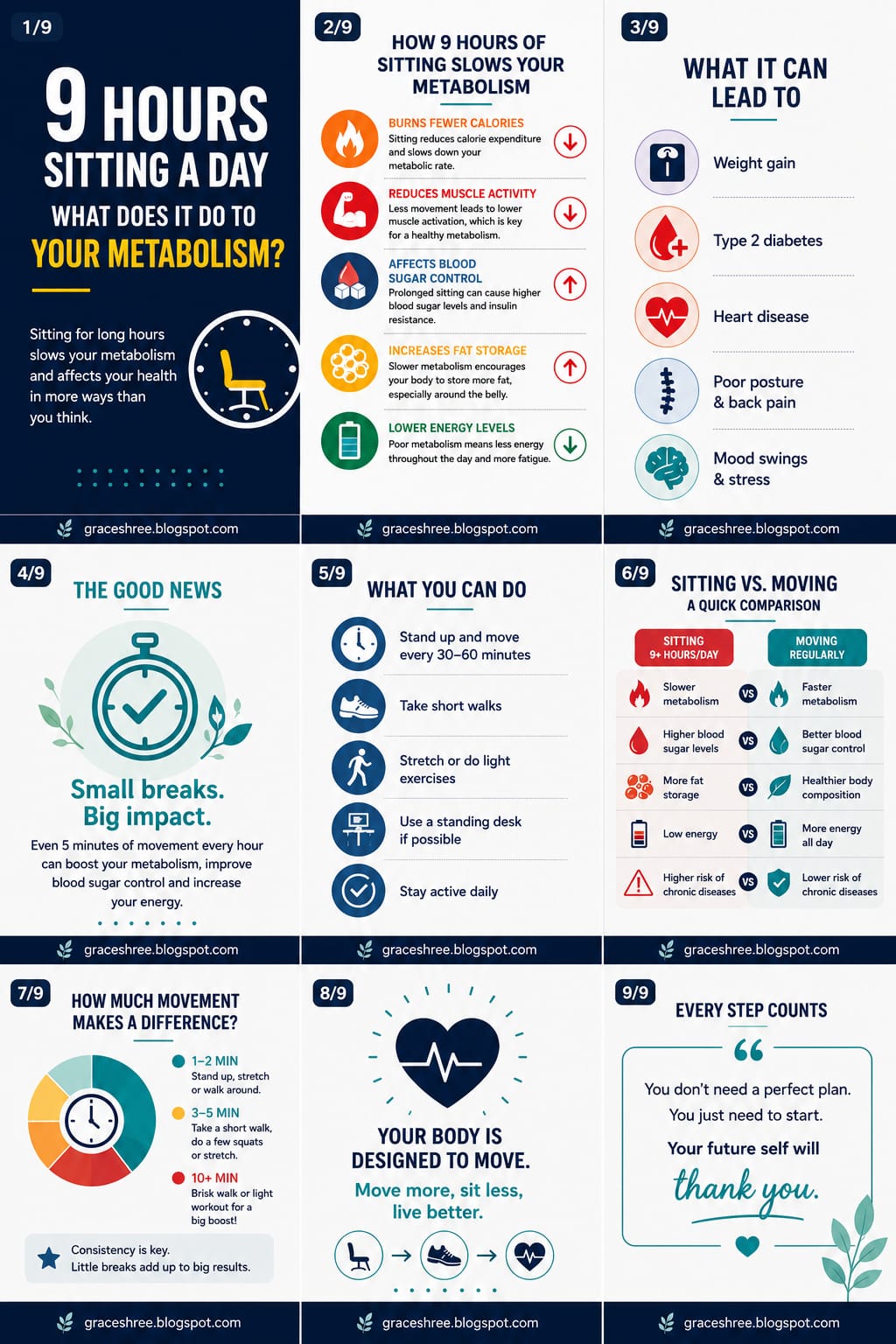
How prolonged sitting affects your metabolism, muscles, brain, heart health, weight and overall well-being — and practical ways to stay healthy while working at a desk.
Introduction
In the modern workplace, most adults spend between 8 to 10 hours sitting every day. Whether typing on a computer, attending online meetings, travelling to work or watching screens, long periods of sitting have become a normal part of daily life.
Although office work appears physically easier than manual labour, the human body is designed for regular movement. Sitting continuously prevents the leg, hip and core muscles from working efficiently. Over time, this reduces calorie burning, slows metabolism, weakens muscles and increases the risk of several chronic diseases.
Metabolism is the process through which your body converts food into energy. When movement decreases, metabolism slows down, causing fat storage, poor blood sugar control, reduced circulation and lower overall energy levels.
Quick fact: Even if you exercise regularly, sitting for long uninterrupted periods throughout the day can still negatively affect your metabolism and overall health.
How sitting harms your metabolism
Long periods of sitting reduce the activity of important muscles responsible for burning calories, processing sugar and maintaining healthy blood circulation. As a result, several harmful metabolic changes occur inside the body.
1. It stops fat burning
Sitting causes a sharp drop in the activity of lipase, the enzyme responsible for breaking down fat. Instead of being used as energy, fat is stored around the abdomen, increasing the risk of obesity.
2. It causes sugar buildup
Active muscles normally absorb glucose from the bloodstream for energy. During prolonged sitting, muscles require very little energy, allowing sugar to remain in the blood for longer periods. Over time, this increases the risk of insulin resistance and Type 2 diabetes.
3. It slows blood flow
Remaining seated for several hours slows healthy blood circulation. Blood tends to pool in the legs, increasing the risk of swelling and blood clots while reducing oxygen delivery to the brain.
Health tip: Standing up and walking for just two or three minutes every 30 minutes helps improve circulation and activates your muscles.
What happens when you sit too long
Your body gradually adapts to prolonged sitting, leading to muscle weakness, stiffness, poor posture, slower metabolism and reduced energy levels.
Tight hips
Remaining seated keeps the hip muscles shortened throughout the day. Over time, these muscles become tight, making it difficult to stand upright comfortably and increasing lower back pain.
Weak glutes
Continuous sitting causes the glute muscles to become inactive. As these muscles weaken, the lower back and legs compensate, increasing strain during walking and other daily activities.
Curved spine (tech neck)
Leaning toward computer screens places excessive pressure on the neck and spine, eventually leading to rounded shoulders, poor posture and chronic neck pain commonly known as tech neck.
Stiff legs
The muscles behind the thighs and calves gradually lose flexibility because they remain in a shortened position for many hours.
Slow metabolism
Inactive muscles burn fewer calories and become less effective at removing fat and sugar from the bloodstream, contributing to weight gain and metabolic disorders.
Low energy levels
Reduced movement decreases blood flow and oxygen delivery to the brain, making you feel tired, sluggish and less productive during the day.
Did you know? Sitting for nine or more hours every day causes your body to gradually adapt to inactivity, making movement more difficult and increasing the risk of several chronic health conditions.
How sitting slows down your brain
Sitting for long hours affects more than your muscles and metabolism — it also impacts your brain. Regular movement helps deliver oxygen and nutrients to brain cells, supporting memory, concentration and emotional well-being. Prolonged inactivity reduces these benefits and may affect mental performance over time.
Movement feeds the brain
When your muscles move, they release beneficial proteins that improve memory, learning ability and mood. Regular physical activity keeps the brain active and healthy.
Sitting causes brain fog
Remaining seated for several hours slows blood circulation and reduces oxygen reaching the brain. This often results in tiredness, difficulty concentrating, slower thinking and reduced productivity.
Inactivity affects mental health
Spending too much time sitting — especially in front of screens — has been linked to an increased risk of stress, anxiety and low mood. Regular movement supports both physical and emotional health.
Healthy habit: Take a short walking break every 30 to 60 minutes to improve blood flow, refresh your mind and maintain better focus throughout the day.
Why long sitting slows weight loss
Even when you follow a healthy diet, sitting for long periods makes losing weight much more difficult because your body burns fewer calories and stores more fat.
Burns fewer calories
Your muscles require very little energy while sitting. As calorie burning decreases, your body stores the unused energy as fat.
Lowers metabolism
Inactive muscles gradually become weaker and burn less energy, even while you are resting. This slows your overall metabolic rate.
Raises blood sugar
When muscles remain inactive, they cannot absorb glucose efficiently. This causes blood sugar levels to remain elevated after meals and increases the risk of insulin resistance.
Causes stiffness and inflammation
Remaining in one position for long periods reduces flexibility, increases joint stiffness and promotes inflammation that contributes to fat accumulation.
Remember: Regular movement throughout the day supports healthy metabolism far better than remaining seated for long uninterrupted periods.
How sitting creates belly fat and changes your appetite
Long hours of sitting encourage fat storage around the abdomen while also influencing hormones that control hunger and appetite.
Slows blood flow
Sitting with bent hips compresses the abdominal region, reducing circulation and encouraging fat accumulation around the waist.
Weakens the core
When the abdominal muscles remain inactive for long periods, they lose strength and reduce overall metabolic efficiency.
Triggers stress fat
Work-related stress increases the release of stress hormones, encouraging the body to store more fat around the belly.
Harms digestion
Poor sitting posture slows digestion, causing bloating and making lower abdominal fat more difficult to lose.
Changes appetite
- Long periods of sitting can increase cravings for sugary foods and refined carbohydrates.
- Mental fatigue often causes unnecessary snacking even when the body does not require extra energy.
- Dehydration caused by air-conditioned office environments may feel like hunger, leading to overeating.
Quick tip: Drink water regularly and avoid confusing thirst or boredom with hunger during long working hours.
Long hours of sitting and its harmful effects
Many people believe that going to the gym for one hour completely offsets sitting all day. However, research shows that prolonged sitting still affects metabolism, even in people who exercise regularly.
The gym trap
A daily workout is beneficial, but it cannot fully reverse the harmful metabolic effects of remaining seated for eight to ten hours.
The solution: NEAT
NEAT (non-exercise activity thermogenesis) refers to the calories burned during everyday movements outside structured exercise.
Examples of NEAT activities
- Walking around the office
- Standing while working
- Taking the stairs
- Household cleaning
- Gardening
- Stretching regularly
Why NEAT matters
Small movements performed throughout the day often burn more total calories than a single workout session. Unfortunately, prolonged sitting reduces NEAT almost to zero.
Midlife risk
Hormonal changes during middle age make metabolism naturally slower. Combined with prolonged sitting, this further increases the risk of obesity, diabetes and cardiovascular disease.
Key takeaway: Exercise is important, but the healthiest approach is to combine regular workouts with frequent movement throughout the entire day.
How sitting harms your body
Sitting for prolonged periods affects much more than your metabolism. It weakens your muscles, reduces bone strength, damages posture and increases the risk of chronic pain. Without regular movement, the body gradually becomes less flexible, less stable and more vulnerable to injury.
Bad posture
Leaning forward toward a keyboard or computer screen places excessive strain on the neck, shoulders and spine. Over time, this weakens the abdominal muscles and contributes to persistent neck pain, shoulder stiffness and lower back pain.
Weak muscles
Muscles become weaker when they are not used regularly. Long hours of sitting reduce the strength of the gluteal muscles while tightening the hip muscles, affecting balance, walking posture and overall mobility.
Weaker bones
Weight-bearing activities such as walking stimulate bone growth and maintain bone density. A sedentary lifestyle reduces this stimulation, gradually increasing the risk of brittle bones and osteoporosis later in life.
Healthy reminder: Strong muscles and healthy bones require regular movement throughout the day — not just occasional exercise.
What is a sedentary lifestyle?
A sedentary lifestyle means spending most of the day sitting or lying down with very little physical movement. This pattern is becoming increasingly common due to desk-based jobs, prolonged screen time and reduced daily physical activity. Healthcare professionals often refer to this as "sitting disease" because of its long-term health consequences.
You may have a sedentary lifestyle if you:
- Sit for most of your working hours.
- Spend several hours using computers, mobile phones or watching television.
- Rarely participate in regular physical exercise.
- Walk very little throughout the day.
- Travel long distances without taking movement breaks.
Although these habits may appear harmless in daily life, they gradually increase the risk of obesity, diabetes, heart disease and many other chronic health conditions.
Did you know? Breaking up long sitting periods with just a few minutes of walking can significantly reduce many of the health risks associated with a sedentary lifestyle.
How it affects your body
Prolonged sitting causes several hidden changes inside the body that develop gradually over months and years. Many of these changes occur silently before symptoms become noticeable.
Physical changes
- Weight gain
- Muscle weakness
- Poor posture
- Reduced flexibility
- Low energy levels
- Feeling tired more easily
Internal changes
- Higher blood sugar levels
- Increased blood pressure
- Raised cholesterol levels
- Reduced insulin sensitivity
- Greater risk of cardiovascular disease
Heart health and desk jobs
Desk jobs require very little physical activity, allowing these health risks to build silently over many years. Reduced muscle activity slows blood circulation, and when combined with unhealthy eating habits or chronic stress, the risk of heart disease becomes even greater.
Important: Long periods of uninterrupted sitting reduce healthy blood circulation, making regular movement an essential part of protecting heart health.
Linked diseases
Insufficient physical activity rarely leads to only one medical condition. Instead, prolonged sitting often contributes to several chronic diseases developing together over time.
- Obesity (excess body weight)
- High blood pressure
- Type 2 diabetes
- High cholesterol
- Heart disease
- Fatty liver disease
- Poor physical fitness
Because these conditions often develop gradually without obvious symptoms, regular medical check-ups are important for early detection and timely treatment.
How to fix it at work
Preventing the harmful effects of prolonged sitting does not require intense workouts. Small, consistent movements throughout the day can significantly improve metabolism, circulation, posture and overall health.
Simple workplace habits
- Stand every 30 minutes: set a reminder and stand or walk for at least two minutes.
- Use a standing desk: alternate between sitting and standing every hour.
- Walk during phone calls: move around whenever you do not need to look at your computer screen.
- Drink more water: use a smaller water bottle or cup so you naturally walk more often to refill it.
- Stretch at your desk: stretch your shoulders, neck, back, hips and legs regularly to improve flexibility and blood circulation.
Takeaway: The healthiest office routine is simple — sit less, stand more and keep moving throughout the day. Small lifestyle changes performed consistently can greatly improve your long-term health.
Conclusion
Modern work often requires people to sit for long hours, but our bodies are designed to move. Sitting continuously slows metabolism, weakens muscles, reduces blood circulation, increases blood sugar levels and raises the risk of obesity, heart disease and Type 2 diabetes.
The good news is that these risks can be greatly reduced through simple daily habits. Standing every 30 minutes, walking during phone calls, stretching regularly, staying hydrated and increasing everyday movement can significantly improve metabolic health and overall well-being.
Remember that regular exercise is important, but it should be combined with frequent movement throughout the day. Small lifestyle changes practised consistently can protect your metabolism, improve productivity and support long-term health.
Final takeaway: Move more, sit less. Your metabolism, muscles, heart and brain will all benefit from every extra step you take.
About the writer
I create informative, evidence-based and easy-to-understand articles on health, nutrition, medical conditions, healthy lifestyles and emerging technologies. My goal is to simplify complex topics into practical information that helps readers make informed decisions about their health and well-being.
Areas of expertise
- Health and wellness articles
- Nutrition and healthy diet guides
- Medical and healthcare writing
- Women's health
- Lifestyle and preventive healthcare
- Technology and Artificial Intelligence
- SEO blog writing
- Educational content development
Explore more health, nutrition and technology articles through my portfolio and blog.